


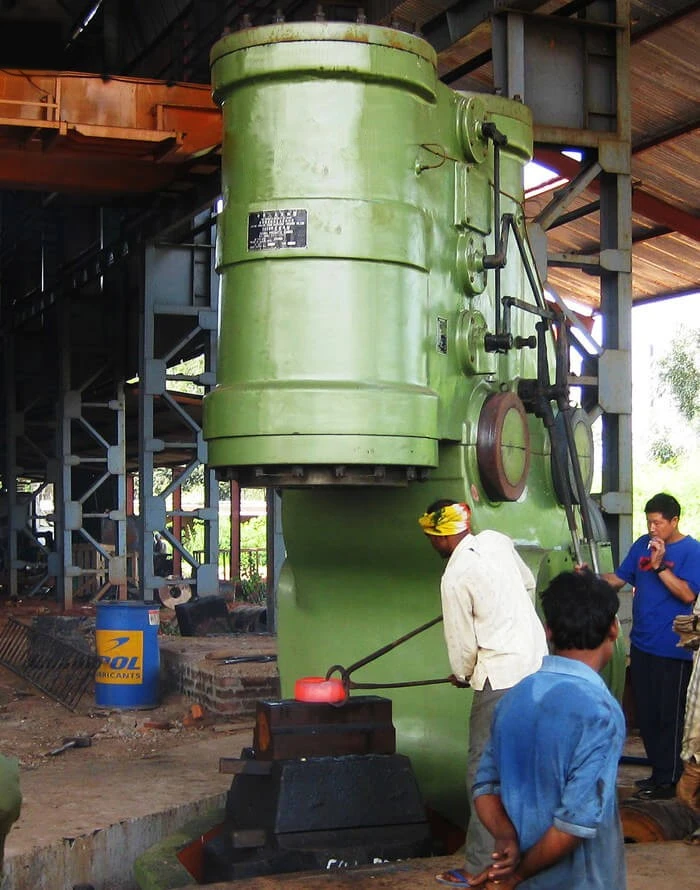

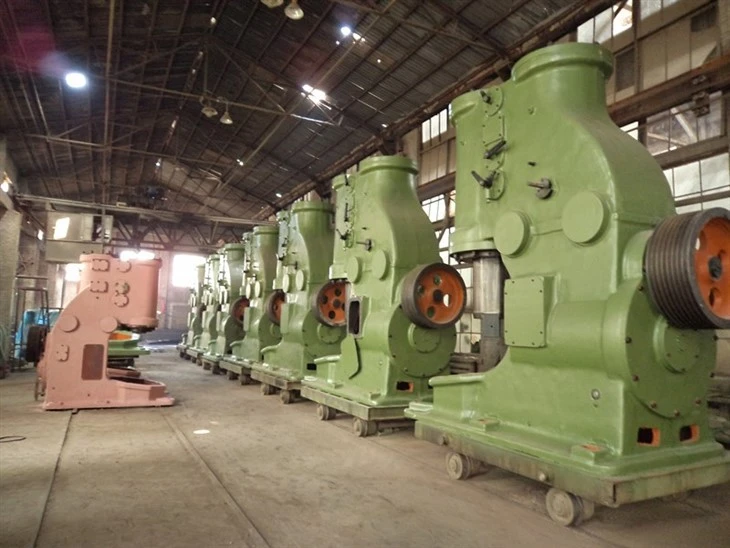

C41 Series Pneumatic Forging Hammer / Power Forging Hammer

Introduce
As a commonly used free forging tool, the C41 pneumatic hammer is often employed for drawing-out, upsetting, punching, chiseling, forge welding, bending, and twisting. The C41 series pneumatic hammer is meticulously designed for long-term use, lasting decades even in harsh industrial environments. Available in models ranging from 150kg to 2000kg, these hammers come with independent power sources and are easy to operate, making them highly user-friendly.
C41 Series Machine Attributes
Die Type :Open die
Support CNC :No
C41 Series Pneumatic Forging Hammer / Power Forging Hammer
MAIN PARAMETER
| Model | Unit | C41-150 | C41-250 | C41-400 | C41-560 | C41-750 | C41-1000 | C41-2000 | |
| Structure | Two pieces | Two pieces | Two pieces | Two pieces | Two pieces | Two pieces | Two pieces | ||
| Weight of falling | kg | 150 | 250 | 400 | 560 | 750 | 1000 | 2000 | |
| Hitting energy | kJ | 2.5 | 5.6 | 9.5 | 13.7 | 19 | 27 | 54 | |
| Hitting frequency | min⁻¹ | 180 | 140 | 120 | 115 | 105 | 95 | 80 | |
| Height of working | mm | 370 | 450 | 530 | 600 | 670 | 800 | 1000 | |
| Depth of throat | mm | 350 | 420 | 520 | 550 | 750 | 800 | 950 | |
| Working Piece | Square | mm | 130×130 | 145×145 | 220×220 | 270×270 | 270×270 | 290×290 | 350×350 |
| Round | mm | φ145 | φ175 | φ240 | φ280 | φ300 | φ320 | φ400 | |
| Motor | Model | Y180M-4-B3 | Y180L-4-B3 | Y200L-4-B3 | Y280M-6-B3 | Y280M-6-B3 | Y315S-6-B3 | Y315L2-6-B3 | |
| Power | Kw | 18.5 | 22 | 30 | 45 | 55 | 75 | 132 | |
| Weight | Include base | kg | 3260 | 5000 | 8000 | 9800 | 17000 | 20000 | 48000 |
| Anvil block | kg | 1500 | 2500 | 4200 | 6300 | 9000 | 12000 | 24000 | |
Operating Principles of C41 Pneumatic Forging Hammers
The operating principles of a self-contained C41 power hammer are very simple. There are basically six components to the power hammer:
- 1. The frame is cast iron. There are several reasons why cast frames have been used for power hammers. Cast frames are more expensive and typically are much heavier. With a cast frame, you can put the strength and mass exactly where you need them. It will not warp or deflect like some steel plate fabricated hammers can do overtime. If you look at the old Massey, Nazel, Chambersburg, and Beche hammers, they were all cast iron. You can find many of these hammers still in operation.
- 2. The motor drives a flywheel with V belts that are external to the hammer. The flywheel is attached to a crankshaft that is set on large tapered roller bearings in a crankcase that is filled with grease. At the opposite end of the flywheel, there is a "throw" that has a connecting rod attached.
- 3. The connecting rod is attached to a compressor piston. When the piston is going up, it creates air pressure that when the valves are opened, forces air into the top of the ram section of the hammer driving the ram down. When the piston is on the downstroke, it creates air pressure that when the valves are opened, moves air into the bottom section of the ram, driving the ram up. The compressor piston has two compression rings and steel wipers on the lower section of the compressor to help keep air from leaking.
- 4. There are two valves, an upper and lower that operate together. When the valves are opened by more pressure on the foot treadle, it allows for increased air to move from the compressor to the ram side of the hammer. The wider the valves are opened, the more air is allowed to move to the ram side, creating more forging force/pressure. The valves are precision machined steel with no rubber parts to deteriorate over time.
- 5. The ram is literally "floating on air" inside the hammer. The forging force of the hammer is created by a combination of the ram weight, the amount of air pressure that is flowing from the compressor through the valves, and the velocity of the ram. The ram does have two sealing rings on the top and a "stiffing box" with steel "wipers" to help keep the air from leaking.
- 6. The last component is the lubrication system. It consists of an oil reservoir, a flow control metering valve, and a one-way check valve. When the compressor piston is on the downstroke, it creates a vacuum that "sucks" oil from the reservoir into the hammer. When the compressor piston is on its upstroke, the one-way check valve closes to keep oil from flowing back into the reservoir. This is a very simple yet reliable system that works. Oil is not only a lubricant to the hammer, it is also a part of the sealing system. With proper lubrication, Anyang hammers will run for many decades. If you would ever need to rebuild an Anyang hammer, it can be done in a day with parts that I stock.Please check out the Video Library to see videos showing more about the operating principles.
- 7. When forging, never "cold forge". Always make sure the metal is hot. Never hit the dies together without red hot steel between them.
- 8. Operate the foot peddle like the accelerator of a car. Ease into the throttle, don't stomp on it. Get the ram moving and then add more pressure as desired.
C41 Pneumatic Forging Hammers Display
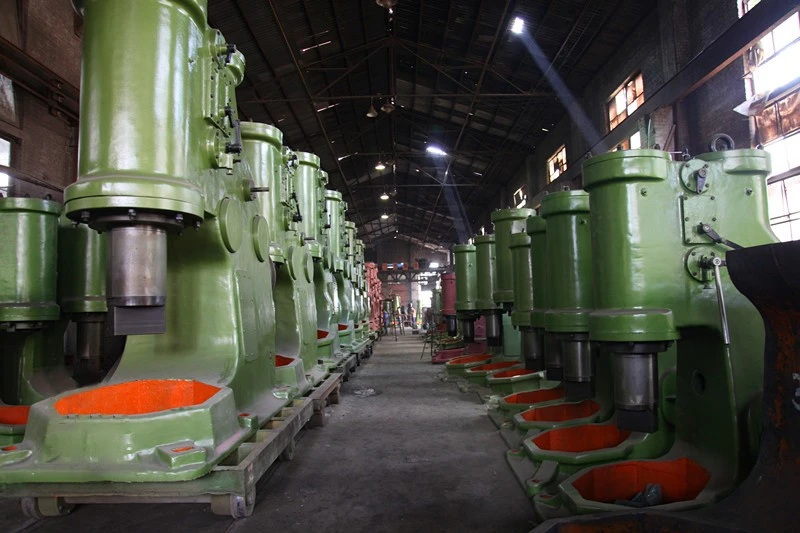
C41 Pneumatic Forging Hammers Display
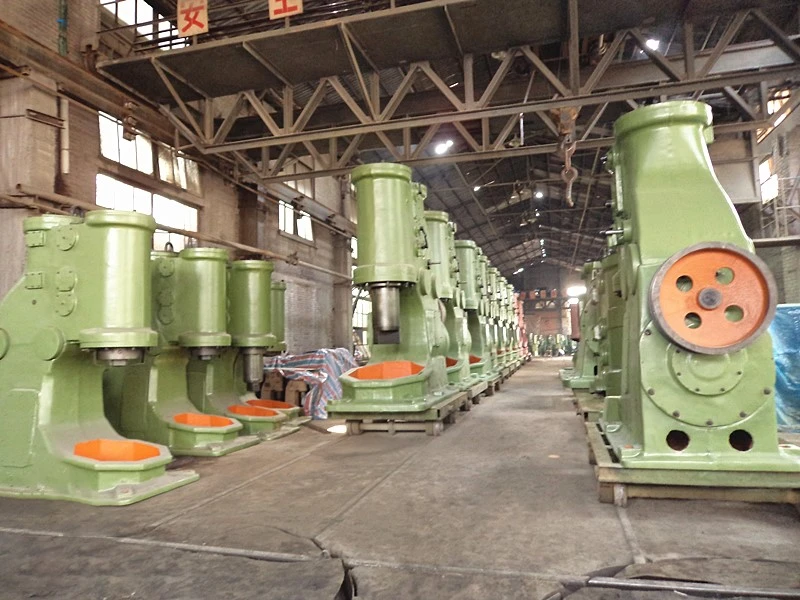
Leave your contact information on the right, email service@hjforging.com or add WhatsApp +86 18560976009 to get more information about forging machines.
Hot Tags: Power Forging Hammer, China Power Forging Hammer manufacturers, suppliers, factory, CWR Processes Two Pieces Per Time, For Heating, Forging Industry Circular Saw Machine, Full Automatic Roll Forging Machine, Cost Effective Cross Wedge Rolling Machine, CWR Machine for Wrench Manufacturing