


Roll Forging Machine
The roll forging machine shapes metal using rotating rollers, offering high efficiency, minimal waste, and improved material strength. It’s ideal for producing long,...

Roll Forging Machine
-
![Roll Forging Machine]()
-
![Semi automatic roll forging machine]() Semi automatic roll forging machineHongjie semi automatic roll forging machine is characterized by its simple and stable structure, high efficiency, and cost-effectiveness. It produces high-quality forgings and offers strong...read more
Semi automatic roll forging machineHongjie semi automatic roll forging machine is characterized by its simple and stable structure, high efficiency, and cost-effectiveness. It produces high-quality forgings and offers strong...read more -
![ZGD Series Automatic Roll Forging Machine]() ZGD Series Automatic Roll Forging MachineZGD series automatic roll forging machine produce kind of steering knuckle, side arm, tie rod end, control arm, upper suspension control arm etc parts.read more
ZGD Series Automatic Roll Forging MachineZGD series automatic roll forging machine produce kind of steering knuckle, side arm, tie rod end, control arm, upper suspension control arm etc parts.read more -
![ZGD Series Roll Forging Machine]() ZGD Series Roll Forging MachineZGD Series Roll Forging Machine ZGD Series Roll Forging Machine Automatic roll forging machine ZGD series are used for pre-forming of work pieces with diameter maximum 40- 200mm of shaft parts...read more
ZGD Series Roll Forging MachineZGD Series Roll Forging Machine ZGD Series Roll Forging Machine Automatic roll forging machine ZGD series are used for pre-forming of work pieces with diameter maximum 40- 200mm of shaft parts...read more -
![Material Saving Roll Forging Machine]() Material Saving Roll Forging MachineHongjie automatic roll forging machine precisely make forging preform, which is much closer to the final part but able to save raw material up to 30%. It’s the most ideal equipment option for...read more
Material Saving Roll Forging MachineHongjie automatic roll forging machine precisely make forging preform, which is much closer to the final part but able to save raw material up to 30%. It’s the most ideal equipment option for...read more -
![Autoparts Roll Forging Machinery]() Autoparts Roll Forging MachineryModel: ZGD260-ZGD1250read more
Autoparts Roll Forging MachineryModel: ZGD260-ZGD1250read more
Billet Diameter: 0mm-200mm
Application: Auto parts, such as crank, connecting rod, control arm, common rail, front beam, etc. -
![Roll Forging Operation]() Roll Forging OperationMore Advanced and Efficient Forging Equipment The Hongjie fully automatic roll forging machine can change the shape of materials to produce forging preforms that are closer to the finished...read more
Roll Forging OperationMore Advanced and Efficient Forging Equipment The Hongjie fully automatic roll forging machine can change the shape of materials to produce forging preforms that are closer to the finished...read more -
![Preforming Reduce Roller Machine]() Preforming Reduce Roller MachineOuter diameter of roll forging die: 260-1250mmread more
Preforming Reduce Roller MachineOuter diameter of roll forging die: 260-1250mmread more
Diameter of billet: 0-200mm
Rotation angle of manipulator: 90° -
![Excavator Parts Roller Forge Machine]() Excavator Parts Roller Forge MachineThe roll forging machine can manufacture excavator accessories, including bucket teeth and adapters. Save materials and improve production efficiencyread more
Excavator Parts Roller Forge MachineThe roll forging machine can manufacture excavator accessories, including bucket teeth and adapters. Save materials and improve production efficiencyread more -
![Forging Roll Machine for Automobile Parts]() Forging Roll Machine for Automobile PartsZGD -460 roll forging machine is mainly for forging automobile parts. Its function is to make blanks and save materials. It can forge round materials with a diameter of less than 80 or square...read more
Forging Roll Machine for Automobile PartsZGD -460 roll forging machine is mainly for forging automobile parts. Its function is to make blanks and save materials. It can forge round materials with a diameter of less than 80 or square...read more -
![High Precision Automatic Forging Rolls]() High Precision Automatic Forging RollsForging roll is an efficient and precise forging equipment, which can achieve precise rolling through the die according to the customer's drawing requirements. It adopts advanced control system...read more
High Precision Automatic Forging RollsForging roll is an efficient and precise forging equipment, which can achieve precise rolling through the die according to the customer's drawing requirements. It adopts advanced control system...read more -
![Reduce Roller with Automatic Feeding Manipulator]() Reduce Roller with Automatic Feeding ManipulatorNo manual feeding operation, reduce roller with automatic feeding manipulator possessing higher automation degree. The automatic feeding system realizes an integral model of preform making, which...read more
Reduce Roller with Automatic Feeding ManipulatorNo manual feeding operation, reduce roller with automatic feeding manipulator possessing higher automation degree. The automatic feeding system realizes an integral model of preform making, which...read more


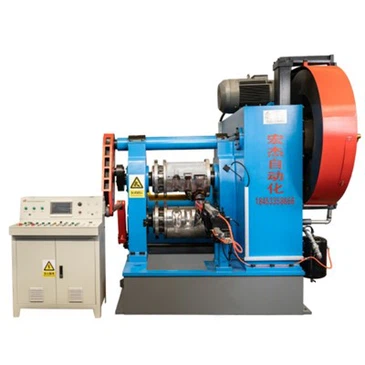

Zibo Hongjie Forging Industry Equipment : Your Trustworthy Roll Forging Machine Manufacturer!
Zibo Hongjie Forging Industry Equipment Co., Ltd.'s products cover all aspects of the forging field, from initial cutting and feeding, to heating, to metal preforming and final metal forming, as well as subsequent trimming and marking, all supported by corresponding equipment. Among them, roll forging machines and cross wedge rolling machines are the main products, which have a high reputation in the forging industry.
Rich Product Range
Our company takes roll forging machines and cross wedge rolling mills as its main products and has a high reputation in the forging industry. In addition to these two main products, it also provides comprehensive supporting equipment, including metal band saws, circular saws, induction heating furnaces, electric screw presses, hot forging presses, punches, etc.
Wide Range of Partners
Our company has established good cooperative relationships with many large enterprises such as Juli Group, Weichai Power, Dongfeng Motor Corporation, Teknorot, etc., and our products have provided forging equipment and solutions to many enterprises and customers in South Korea and other countries.
Advanced Production Equipment
Our production base has multiple independent processing centers. Such as floor boring and milling, five-side milling machining center, CNC machining center, drilling machine and large CNC processing equipment, etc. These are necessary CNC machinery and equipment for modern manufacturing.
Wide Range of Applications
Our products have been sold all over the world and are widely used in industries such as auto parts, hardware tools, power hardware, rigging and construction machinery.
What is Roll Forging Machine
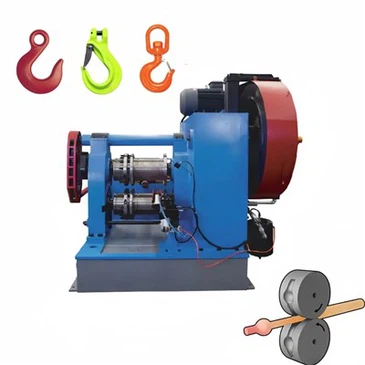
A roll forging machine is a type of metalworking equipment that uses rotating rolls to shape metal materials into desired shapes and sizes. The process involves passing the workpiece through a set of rolls that apply compressive forces, which cause the metal to deform and elongate. Roll forging is a continuous operation, where metal stock is fed into the rolls and comes out as a finished product with a uniform cross-section along its length.
Features of Roll Forging Machine
Customization Options
Roll Forging Machine offer flexibility in terms of customization. By adjusting the machine settings, manufacturers can produce furring channels of different dimensions, profiles, and material thicknesses, catering to the specific needs of their projects.
High Production Speed
The automated nature of Roll Forging Machineenables rapid production rates. These machines can roll form furring channels at a consistent speed, allowing for efficient manufacturing processes and timely completion of construction projects.
Consistent Quality and Accuracy
The precise control offered by Roll Forging Machine ensures consistent quality and accuracy in the manufactured channels. The uniformity of the channels enhances their structural integrity and facilitates seamless installation, leading to a superior end result.
Automation
Roll Forging Machine is often equipped with automation features such as programmable logic controllers (PLCs), hydraulic feed systems, and sensors that control the speed, force, and position of the rolls to optimize the forging process.
Types of Roll Forging Machine
01/
Two-Roll Rolling Mills
Two-Roll Rolling Mills are the simplest type of roll forging machines, consisting of two counter-rotating rolls. They are primarily used for the production of simple symmetrical shapes, like round bars, tubes, and other hollow profiles.
02/
Three-Roll Rolling Mills
Three-roll machines have an additional central roll that allows for the forming of asymmetric shapes and complex geometries. They are versatile and can handle a wide range of part sizes and shapes.
03/
Four-Roll Rolling Mills
Four-Roll Rolling Mills With two pairs of rolls arranged in a vertical or horizontal configuration, four-roll mills are capable of producing very precise shapes with close tolerances. They are particularly useful for forming intricate profiles and for rolling thin-walled parts.
04/
Planetary Rolling Mills
Planetary Rolling Mills use a series of rolls arranged in a planetary system, where the central roll rotates while the surrounding rolls orbit around it. Planetary rolling mills are known for their ability to produce parts with high degrees of symmetry and uniformity.
05/
Spindle Rolling Mills
Spindle rolling machines utilize spindles that hold and rotate the workpiece as it passes through the rolls. This type is suitable for the production of long, slender parts with a uniform diameter along their length.
06/
Roller Die Forging Machines
Roller Die Forging Machines combine the principles of roll forging with die forging. The workpiece is passed between rolls with integrated dies that impart both the shape and the required mechanical properties to the material.
07/
Compound roll forging machine
The compound roll forging machine is suitable for mass production of forgings. The billet making and forming processes can be carried out simultaneously in one machine. 3~4 pairs of forging dies can be installed on the inner roll, and 2~3 pairs of forging dies can be installed on the outer roll.
08/
General roll forging machine and customized roll forging machine
For blanks or forgings that generally do not have special process requirements, the roll forging machine can be directly selected according to the parameters of the forging, which can save costs and improve efficiency. For some blanks and forgings with special process requirements and large batches, it is necessary to develop a high-efficiency special roll forging machine for them.
Parts of Roll Forging Machine
Roll Sets
These are the cylindrical elements that perform the actual forging operation. They are precisely machined to the desired shape and are often heat-treated to withstand the high forces and temperatures encountered during forging.
Roll Bearing Assemblies
These support the rolls and allow them to rotate smoothly under load. They must be robust to handle the significant torque and forces generated during the forging process.
Drive System
This system provides the power to rotate the rolls. It can include electric motors, gearboxes, and drive belts or chains. The drive system must be capable of delivering consistent and controllable speed to the rolls.
Feed Mechanism
This mechanism advances the metal stock into the roll gap at a controlled rate. It can be a simple manual feed or a more complex automated system with hydraulic or pneumatic actuators.
Frame
The frame houses all the moving parts of the roll forging machine and provides structural integrity to withstand the forces exerted during operation. It is usually made from heavy-duty steel and is designed to be durable and stable.
Control System
This may range from basic manual controls to sophisticated computerized systems. It regulates the operation of the machine, ensuring precise control over speed, feed rate, and roll gap settings.
Guide System
To ensure that the metal stock is properly aligned as it enters the rolls, guide systems are used. These can include rails, rollers, or other guiding devices.
Cooling and Lubrication Systems
These help to dissipate heat generated during forging and reduce wear on the rolls and other components. Cooling systems can use water or air, while lubrication systems apply oil or grease to the contact surfaces.
Safety Interlocks and Devices
These are critical to protect operators and machinery. They include emergency stop buttons, safety guards, and interlocks that prevent the machine from operating if certain conditions are not met.
Roll Adjustment Mechanisms
These mechanisms allow for fine-tuning the space between the rolls (roll gap) to accommodate different stock sizes and to maintain proper alignment throughout the forging process.
Working Principle of Roll Forging Machine

Feeding the Workpiece
The prepared workpiece is fed into the roll forging machine using a manipulator or manual handling.

Rolling and Deformation
The deformation is gradual and continuous, reducing the cross-sectional area of the workpiece while elongating it to the desired length and shape.

Control System
The control system operates the various components of the machine, regulating the speed, length, and other parameters of the roll forming process.
Types Of roll forging machine
Lorem ipsum dolor sit, amet consectetur adipisicing elit.
01/
Horizontal roll forging machine
Generally, roll forging machines use horizontal feeding, and the rolls are arranged up and down, which is called a horizontal roll forging machine.
02/
vertical roll forging machine
When the two forging rolls are arranged horizontally on the left and right, and the blank is fed in the vertical direction, this roll forging machine is called a vertical roll forging machine, which is suitable for roll forging of extra-long blanks or forgings.
03/
Inclined roll forging machine
When there are special requirements for roller forgings, the plane where the center lines of the two forging rolls are located is arranged at a 45° angle to the horizontal plane, and the blank is fed in from the oblique bottom. The forged forgings after roll forging return to the receiving table by their own weight. This type of roll forging machine is called an inclined roll forging machine, which is suitable for working on an assembly line.
04/
Cantilever roll forging machine.
The working part of the forging roll of the roll forging machine is suspended from the frame to facilitate the installation and replacement of forging dies, especially suitable for the installation and replacement of ring dies.
05/
double-supported rolling forging machine
The working part of the forging roll of the double-supported rolling forging machine is supported between two upright frames by bearings. The forging roll has greater rigidity and can be used for forming roll forging or cold roll forging, and sometimes also for billet making.
06/
Compound roll forging machine
The compound roll forging machine has the characteristics of both cantilever and double-support types, and has the performance and advantages of both, and is more versatile.
How to Choose Roll Forging Machine
Dimensions of Forged Parts
The maximum diameter and length of the workpiece will determine the table size of the roll forging machine and the stroke of the roll forging machine.
Forging Material
Different materials require different roll forging machine, because different materials have different hardness and strength. The design and specifications of the roll forging machine should be able to meet the processing requirements of the forging material.
Production Capacity
According to the expected production volume and production process requirements to select the appropriate roll forging machine. We need to consider the number of forging cycles per minute, the maximum tonnage per forging, and the ability of the roll forging machine to run continuously.
Automation Level
Some roll forging machines are equipped with automated control systems, which can improve productivity and work reliability.
How to Use Roll Forging Machine
Machine Preparation
Before starting the machine, check all parts for wear, damage, or misalignment. Make sure the rollers are clean and properly lubricated. Check the cooling system and lubrication system to confirm they are functioning properly.
Material Selection
Select the appropriate metal raw material for the forging process. The material should have a chemical composition and physical properties suitable for the intended application.
Set Up
Adjust the roll gap according to the size of the required forging. Set machine speeds and feed rates to match material properties and dimensions of the parts being produced.
Heating Blank
If necessary, preheat the metal blank to a temperature suitable for forging. This temperature depends on the type of material and the size of the part.
Feeding
The heated metal raw material is slowly and evenly fed into the roller. Make sure the blank is centered and straight as it enters the rolls to avoid irregularities during the forging process.
Forging Operations
As the blank passes through the rollers, it deforms and elongates to assume the desired shape. The rollers apply pressure to shape the material without the need for extensive heating or hammering.
Trimming and Straightening
After forging is complete, excess material can be trimmed and the part straightened if necessary.
Examine
Inspect forgings for defects such as cracks, seams, or inconsistent shapes. Make sure it meets the required specifications.
Cool and Clean
The forging is allowed to cool at a controlled rate to prevent warping and relieve internal stresses. After cooling, clean the parts to remove any remaining oxide or lubricant.
Machine Shuts Down
After completing the forging run, shut down the machine according to the manufacturer's guidelines. Clean and maintain machines to ensure they are ready for the next production cycle.
How to Install Roll Forging Machine



Site Preparation
Select a suitable location for the machine that is level, vibration-free, and has adequate access for operation and maintenance. The floor should be strong enough to support the weight of the machine.
Uninstall and Locate
Transport the machine components to the installation site and unload them carefully. Use lifting equipment such as a forklift or crane to move heavy components such as frames and roller sets. Position the machine in its final position, making sure it is properly aligned with the guide system and rolling axes.
Alignment
Use precision measuring tools to check machine alignment. Align the rolls with the centerline of the machine to ensure proper rotation and forging accuracy. Adjust feet or spacers as needed to achieve desired alignment.
Roller Installation
Place the roller set on the bearings and secure with bolts or other fasteners. Make sure the roller is in the center of the machine.
Lubrication and Cooling System
Connect the lubrication system to ensure that all moving parts, especially the rollers, are fully lubricated. If roller cooling is required, install a cooling system and connect it to the water supply system.
Drive and Control Systems
Install the electric motor and connect it to the drive system. Make sure all electrical connections are tight and meet safety standards. Connect the control panel and test the control systems to verify they are functioning properly.
Safety Interlocks and Guards
Install all safety devices, including emergency stops, safety guards and interlocks. Make sure these devices are functioning properly and comply with local safety regulations.
Machine Leveling
Use the leveling device to check and adjust the machine to ensure it is level. Proper leveling is critical to the precise operation of the rolls and the quality of the forgings.
Initial Testing
Carry out a trial run without feeding material to check the operation of the machine. Listen for unusual noises, observe for unusual movements, and check for leaks in the lubrication and cooling systems.
Adjustment and Calibration
After the initial test, make any necessary adjustments to the machine settings, including roll gap, feed rate, and speed. Calibrate machines to ensure precise forging operations.
Final Check
Perform final inspections to ensure that all components are installed correctly, all systems are operating properly, and the machine is ready for full operation.
How to Maintain Roll Forging Machine
Cleaning
Wipe down and clean the machine to remove any accumulated metal chips, dust, and lubricant residue. Pay special attention to areas where debris could cause damage or affect the machine's operation.
Lubrication
Apply lubricants to all moving parts according to the manufacturer's recommendations. This includes greasing points, bearing housings, and any other areas that require regular lubrication to reduce friction and wear.
Tightening
Periodically check and tighten all nuts, bolts, and fasteners. Vibrations and continuous use can loosen these components, leading to potential hazards or machine malfunctions.
Roll Gap Adjustment
If the machine has an adjustable roll gap, check and adjust it as necessary to maintain the correct forging dimensions and tolerances.
Hydraulic System
Inspect the hydraulic fluid levels and quality. Replace or top off the fluid as required, and check for any leaks or signs of contamination.
Cooling System
If the machine uses water or another coolant for roll cooling, inspect the coolant levels and quality. Flush and refill the system as needed to prevent scale buildup and ensure efficient heat dissipation.
Electrical System
Visually inspect the electrical connections, cables, and components for wear, damage, or corrosion. Tighten connections and replace any damaged parts to ensure the electrical system operates reliably.
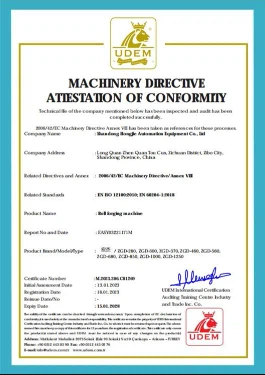
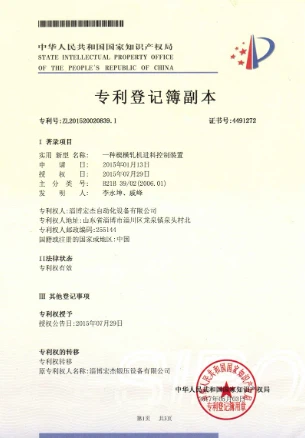
Certificate



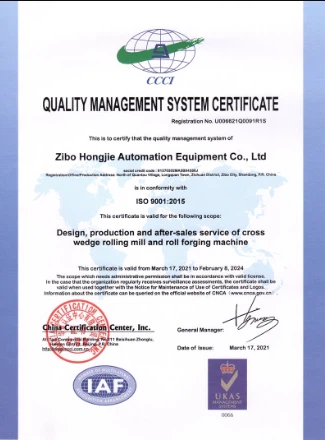
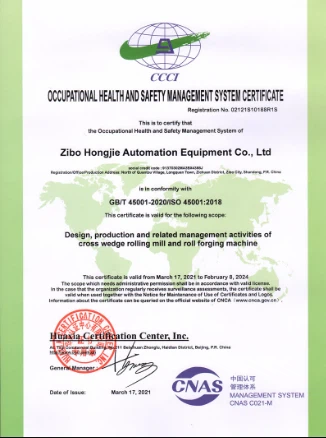
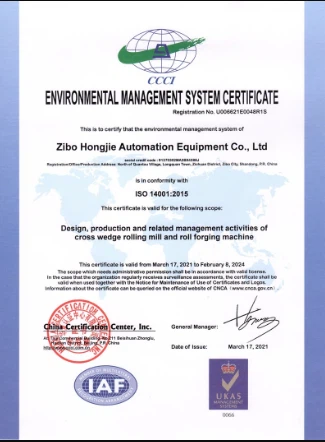
Frequently Asked Questions
As one of the most professional roll forging machine manufacturers and suppliers in China, we're featured by quality products and competitive price. Please rest assured to buy roll forging machine for sale here from our factory.
Eco Friendly Cross Wedge Rolling Machine, Pre Forging Billet Wedge Rolling Mill, Hot Cold Forging Wedge Rolling Machine