


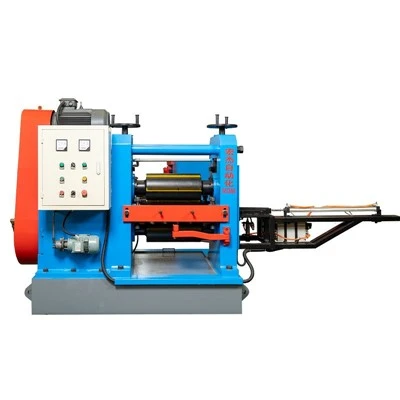
Zibo Hongjie Forging Industry Equipment : Your Trustworthy D46 Series Automatic Cross Wedge Rolling Manufacturer!
Zibo Hongjie Forging Industry Equipment Co., Ltd.'s products cover all aspects of the forging field, from initial cutting and feeding, to heating, to metal preforming and final metal forming, as well as subsequent trimming and marking, all supported by corresponding equipment. Among them, roll forging machines and cross wedge rolling machines are the main products, which have a high reputation in the forging industry.
Rich Product Range
Our company takes roll forging machines and cross wedge rolling mills as its main products and has a high reputation in the forging industry. In addition to these two main products, it also provides comprehensive supporting equipment, including metal band saws, circular saws, induction heating furnaces, electric screw presses, hot forging presses, punches, etc.
Wide Range of Partners
Our company has established good cooperative relationships with many large enterprises such as Juli Group, Weichai Power, Dongfeng Motor Corporation, Teknorot, etc., and our products have provided forging equipment and solutions to many enterprises and customers in South Korea and other countries.
Advanced Production Equipment
Our production base has multiple independent processing centers. Such as floor boring and milling, five-side milling machining center, CNC machining center, drilling machine and large CNC processing equipment, etc. These are necessary CNC machinery and equipment for modern manufacturing.
Wide Range of Applications
Our products have been sold all over the world and are widely used in industries such as auto parts, hardware tools, power hardware, rigging and construction machinery.
Related Product Introduction

A high-efficiency cross wedge rolling (CWR) machine is an advanced piece of industrial equipment used in metal forging. It is designed to transform round or square billets into hexagonal, octagonal, or other polygonal shapes. The machine operates on the principle of applying a wedge that gradually reduces the billet's diameter from one end to the other, while simultaneously moving the billet forward through a set of dies.

CWR machines, or Cross Wedge Rolling machines, are utilized in forging operations to produce shafts and other cylindrical parts with high precision and efficiency. The CWR process involves feeding a solid billet through a set of dies, with two opposing wedges converging at an angle, which applies a radial force and reduces the cross-sectional area of the billet. This results in a forged part with the desired diameter and length.

Metal pre forming machines are used to prepare metal blanks before they undergo final forging or other forming processes. The primary objective of preforming is to reduce the amount of material that needs to be worked during the final forging step, thus conserving energy, reducing material wastage, and improving the overall efficiency of the forging process.

Hot Cold Forging Wedge Rolling Machine
Hot cold forging wedge rolling machines are specialized pieces of equipment used in the metalworking industry to produce cylindrical parts through a process known as upsetting or extrusion. These machines combine the principles of forging and rolling to create parts with improved mechanical properties and a reduced need for additional machining.

Construction Industry Roll Forging Machine
Construction Industry Roll Forging Machine is a specialized equipment used in the manufacturing of metal components for the construction industry. The process of roll forging involves deforming a metal billet into a desired shape using rotating rolls under high pressure. This method is commonly employed to produce axles, gears, crankshafts, and other components that require precise dimensions and superior mechanical properties.

Forging Roll Machine Auto Component
A forging roll machine used for auto components is designed to manufacture various parts for vehicles through the process of roll forging. This process involves shaping metal materials between two or more rolls to achieve the desired geometry and mechanical properties. In the context of auto components, this can include parts such as connecting rods, drive shafts, gears, and suspension components.

Automobile Industry Roller Forge Equipment
In the automobile industry, roller forge equipment, also known as roll forging machines, plays a crucial role in producing high-strength, precision engineered components. These machines utilize pairs of rotating cylindrical rolls to exert controlled force on metal workpieces, which are progressively deformed to the desired shape. The process is typically carried out at elevated temperatures to reduce the required force and enhance material flow.

Full Automatic Roll Forging Machine
A full automatic roll forging machine is an advanced piece of engineering equipment used to create metal parts by passing the workpiece through a pair of rotating rolls. This process, known as roll forging, involves the gradual deformation of the metal as it is fed through the rolls, which apply compressive forces to shape the part to the desired dimensions and improve its mechanical properties.
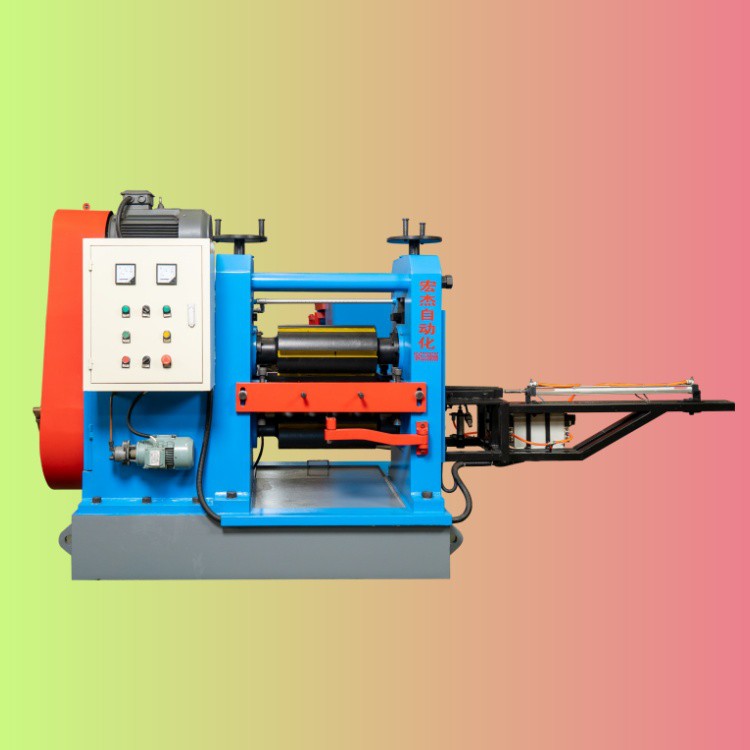
Cross wedge rolling (CWR) machines are highly efficient for producing automotive parts due to their ability to create complex geometries and strong, lightweight components. In the automotive industry, CWR is particularly useful for manufacturing parts that require high strength-to-weight ratios, such as connecting rods, crankshafts, drive shafts, and axles.
What is D46 Series Automatic Cross Wedge Rolling
The D46 Series Automatic Cross Wedge Rolling (ACWR) is a type of rolling technology used in the metalworking industry to produce cylindrical or near-cylindrical shapes from billets, tubes, and other preforms. This process involves using a set of dies that rotate around the workpiece as it is passed through them, applying compressive forces to reduce its diameter and elongate its length.
Features of D46 Series Automatic Cross Wedge Rolling
Grain Structure
D46 Series Automatic Cross Wedge Rolling creates favorable grain flow patterns within the material, thereby improving mechanical properties. This includes enhanced ductility and tensile strength, which are critical for high stress applications.
Precision Control
Our product's automated control system accurately adjusts rolling speed, temperature and reduction ratio to ensure consistency in product size and quality.
Improve Surface Quality
The smooth rolling action tends to produce parts with a higher surface finish, reducing the need for polishing or other finishing operations.
Integrate With Other Processes
The D46 Series Automatic Cross Wedge Rolling can be integrated into a complete production line, working with other processes such as heat treatment, inspection and assembly to streamline production.
Parts of D46 Series Automatic Cross Wedge Rolling
Rolling Mill Stand
The rolling mill stand is the main structural component that houses all other components of the machine. It provides necessary support and stability during rolling operations.
Wedge Roller
Wedge rollers apply the compressive force required to reduce the cross-sectional area of the workpiece. They are usually tapered and can be adjusted to change the degree of deformation.
Drive System
The drive system powers the wedge roller and may include a motor, gearbox, and other actuators. It must be able to provide precise and controlled movement to ensure precise rolling.
Guide Rollers
Guide rollers help guide the workpiece through the machine, keeping it aligned with the wedge rollers and preventing any deviation during the rolling process.
Feeding Mechanism
The feed mechanism moves the workpiece into and out of the rolling area. It can be hydraulically driven, mechanically driven or servo-driven, depending on the design of the machine.
Control System
Computer numerical control (CNC) systems are often used to automate the rolling process. It controls the movement of wedge rollers, guide rails and feed mechanisms based on preprogrammed parameters or real-time feedback.
Hydraulic System
Hydraulic cylinders and pumps are often used to provide the force required to move wedge rollers and other components. They also aid in the clamping and loosening of workpieces.
Heating Furnace
If the workpiece needs to be heated before rolling, the machine may include a heating furnace. The temperature of the material affects its ductility and the quality of the rolled parts.
Cooling System
After rolling, the part may need to be cooled to room temperature or to a specific temperature for further processing. Cooling systems may include air or water cooling mechanisms.
Lubrication System
To minimize friction and wear between moving parts and workpieces, a lubrication system is essential. This may involve applying oil or grease to rollers and other contact surfaces.
Workpiece Handling System
The system consists of cranes, cranes or conveyors that transport workpieces to and from the rolling mill.
Safety Interlocks and Devices
To protect operators and equipment, safety features such as light curtains, emergency stops and alarms are incorporated into the design.
Working Principle of D46 Series Automatic Cross Wedge Rolling
Preparation of Workpieces
The raw material (usually a steel billet or tube) is prepared by cutting it to the required length and possibly heating it to a suitable temperature to enhance its ductility and reduce the rolling force required.
Load
Heated workpieces are loaded onto ACWR machines, typically using a handling system that may include a crane or conveyor. Once positioned, the workpiece is held securely in place by a clamp or clamping mechanism.
Initial Rolling Pass
Wedge-shaped rollers at an angle to the workpiece axis move toward each other. As they converge, they exert pressure on the workpiece, causing it to elongate and reduce its diameter. This initial pass forms the first stage of the cross wedge rolling process.
Final Passes and Popups
Once the final dimensions are reached, the final pass is performed and the workpiece is ejected from the machine. The part is now ready for cooling and further processing, such as heat treatment or machining.
Continuous Rolling Passes
After the initial pass, the workpiece is rotated about its longitudinal axis and the wedge roller is adjusted to its new position. The workpiece then passes through the wedge roller again, further reducing its diameter and increasing its length. This rotation and repositioning process continues several times until the desired size is achieved.
Shape Formation
With each pass, the wedge rollers not only reduce the diameter but also refine the cross-sectional shape of the workpiece. The conical shape of the roller gradually gives the workpiece the desired contour, which can range from a simple cylindrical shape to more complex geometries.
How to Choose D46 Series Automatic Cross Wedge Rolling
Consider Machine Flexibility and Customization
Depending on your specific requirements, you may need a machine that can be customized or adapted to different types of products. Consider whether the D46 series automatic cross wedge rolling mill can flexibly adjust parameters such as wedge angle, rolling speed or workpiece diameter to meet various production needs.
Evaluate the Safety Features of Your Machine
Safety should be a top priority when choosing any industrial machinery. Look for D46 Series automatic cross wedge rolling mills with safety features such as emergency stop buttons, guards and safety interlocks. Ensure machines comply with relevant safety standards and regulations.
Automation Degree
Some D46 Series Automatic Cross Wedge Rolling are equipped with automated control systems that can increase productivity and work reliability.
How to Use D46 Series Automatic Cross Wedge Rolling


Machine Preparation
Before starting the rolling process, inspect the machine for any obvious damage or wear. Make sure all safety guards are in place and functioning properly.
Material Preparation
Choose the appropriate raw materials and cut them to the required length. The material is heated to the optimum temperature for cross wedge rolling, usually above its recrystallization temperature, to increase ductility and reduce the rolling force required.
Machine Settings
Material is loaded onto the ACWR machine and held in place with clamps or clamping mechanisms. Set the wedge roller to the desired angle and position based on the specifications of the part you want to produce.
Programming and Calibration
The parameters of the rolling process are entered into the machine's control system. This includes the passes, angle of rotation between passes, roll speed and feed rate. Calibrate the machine to ensure precise movement of the wedge roller and workpiece.
Security Check
Carry out safety checks to ensure that all emergency stop buttons, alarms and interlocks are functioning properly. Verify that the machine is within safe operating limits.
Boot Process
The rolling process is started by activating the drive system. Observe the first pass to confirm that the material is pressed down evenly and that the wedge rollers are engaged correctly.
Monitoring Process
During the rolling process, the performance of the machine and the condition of the material are continuously monitored. Look for any signs of unusual behavior, such as excessive vibration or unusual noise, and address them immediately.
Adjustments and Corrections
If necessary, adjust the wedge roller position or control parameters to correct any deviations from the intended geometry of the part.
Complete Process
After completing all required passes, bring the machine to a complete stop. The finished part is loosened and removed from the machine using a workpiece handling system.
Post-Processing and Cleanup
If necessary, cool the part and perform any necessary post-rolling operations such as straightening or heat treatment. Clean the machine to remove any debris or residue from the rolling process.
How to Maintain D46 Series Automatic Cross Wedge Rolling
Periodic Inspection
Perform a routine inspection of the machine to check for any signs of wear, damage, or loose parts. Pay attention to areas such as bearings, gears, rollers and hydraulic systems.
Lubricating
Keep the machine properly lubricated according to the manufacturer's recommendations. Use recommended lubricants and ensure all lubrication points are adequately maintained to prevent friction and wear.
Clean
Keep the machine clean by removing any debris, dust or metal shavings that may have accumulated during operation. Use compressed air or a brush to clean hard-to-reach areas, and avoid using harsh chemicals that can damage your machine.
Alignment
Regularly check and adjust the alignment of machine components to ensure they are properly aligned for optimal performance. Misalignment can cause uneven wear and reduce efficiency.
Calibration
Regularly calibrate your machine's sensors, controls and measurement systems to ensure accurate operation and consistent product quality. Please follow the manufacturer's calibration procedure guidelines.
Wear Parts Replacement
Replace any worn or damaged parts such as rollers, dies or cutting tools as soon as you detect signs of wear. Prompt replacement helps prevent further damage to the machine and ensures continued productivity.
Security Check
Verify that all safety features and emergency stop mechanisms are functioning properly. Replace any damaged or malfunctioning safety parts immediately to prevent accidents or injuries.
Automobile Industry
D46 series equipment is used to produce various automotive parts, such as drive shafts, half shafts, steering components, suspension components, etc. Cross wedge rolling enables efficient and precise shaping of these components, resulting in increased strength and performance.
Aerospace Industry
In the aerospace industry, D46 series machines are used to manufacture critical components such as turbine blades, landing gear parts and structural elements. Cross wedge rolling ensures the production of high-quality components with excellent mechanical properties.
Achitechive
D46 series machines are used in the construction industry to produce steel bars, anchor bolts and other structural elements. The cross-wedge rolling process increases the strength and durability of these components, making them suitable for demanding construction applications.
Machinery and Equipment Manufacturing
D46 series machine tools are used to manufacture various mechanical equipment parts, such as gears, shafts, couplings, etc. Cross wedge rolling enables the production of complex-shaped components with high precision and improved mechanical properties.
Oil and Gas Industry
In the oil and gas industry, D46 series machines are used to manufacture drill pipe, drill collars and other downhole tools. The cross-wedge rolling process ensures the production of high-strength components that can withstand harsh drilling conditions.
Power Generation Industry
D46 series machines are used in the power generation industry to manufacture turbine blades, generator shafts and other critical components. Cross wedge rolling produces components with excellent fatigue resistance and performance.
Railway Industry
D46 series machines are used to manufacture railway axles and other components used in the railway industry. Cross wedge rolling ensures the production of components with high strength, durability and dimensional accuracy.
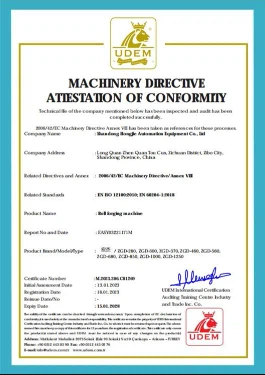
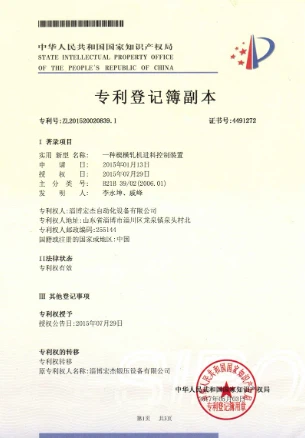
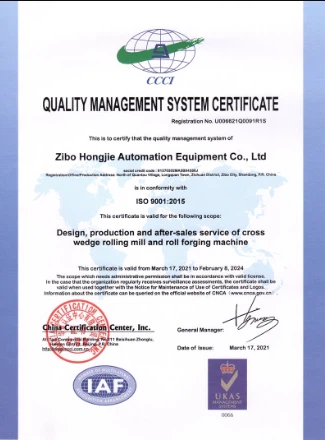
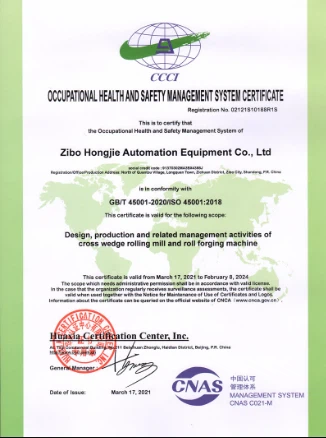
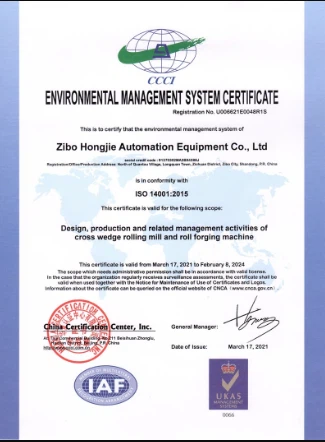
Certificate



Frequently Asked Questions
Hot Tags: Cwr Machine For Wrench Manufacturing Factory, China Cwr Machine For Wrench Manufacturing Factory manufacturers, suppliers, factory, Cross Wedge Rolling Machine, Rigging Parts Shackles Hooks Forging Machine, Automatic Metalworking Rolling Mill, Customise Bucket Teeth Forging Line, Full Set Of Custom Forging Solutions, For Trimming