


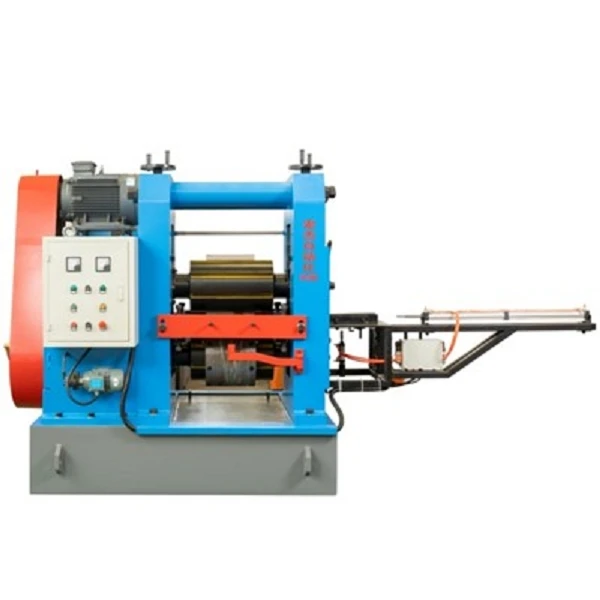
Zibo Hongjie Forging Industry Equipment : Your Trustworthy Cross Wedge Rolling Machine Manufacturer!
Zibo Hongjie Forging Industry Equipment Co., Ltd.'s products cover all aspects of the forging field, from initial cutting and feeding, to heating, to metal preforming and final metal forming, as well as subsequent trimming and marking, all supported by corresponding equipment. Among them, roll forging machines and cross wedge rolling machines are the main products, which have a high reputation in the forging industry.
Rich Product Range
Our company takes roll forging machines and cross wedge rolling mills as its main products and has a high reputation in the forging industry. In addition to these two main products, it also provides comprehensive supporting equipment, including metal band saws, circular saws, induction heating furnaces, electric screw presses, hot forging presses, punches, etc.
Wide Range of Partners
Our company has established good cooperative relationships with many large enterprises such as Juli Group, Weichai Power, Dongfeng Motor Corporation, Teknorot, etc., and our products have provided forging equipment and solutions to many enterprises and customers in South Korea and other countries.
Advanced Production Equipment
Our production base has multiple independent processing centers. Such as floor boring and milling, five-side milling machining center, CNC machining center, drilling machine and large CNC processing equipment, etc. These are necessary CNC machinery and equipment for modern manufacturing.
Wide Range of Applications
Our products have been sold all over the world and are widely used in industries such as auto parts, hardware tools, power hardware, rigging and construction machinery.
Related Product Introduction

CWR Processes Two Pieces Per Time
CWR, or Continuous Web Rolling, is a process used in metal forming where a continuous strip of metal is passed through a set of rolls to reduce its thickness and possibly alter its width. In the context of processing two pieces per time, this could refer to a dual-strip rolling setup where two strips are fed simultaneously into the rolls. This configuration allows for increased production efficiency compared to single-strip rolling.

Pre Forging Billet Wedge Rolling Mill
Pre forging billet wedge rolling mills are designed to prepare billets for subsequent forging processes. The main purpose of pre-forging is to remove casting defects, refine the grain structure, and achieve the desired shape and dimensions before the final forging operation. This process enhances the material's mechanical properties and ensures better surface quality and dimensional accuracy in the finished product.

Trailer Ball Mass Forging Press Machine
A trailer ball mass forging press machine is specifically designed to forge the ball portion of a trailer hitch, commonly known as a trailer ball. The forging process begins with a round billet of metal, typically steel, which is heated to a high temperature to increase its ductility. Once the billet reaches the appropriate temperature, it is placed into the forging press.

Cross Wedge Rolling Machine Replace Hammer
Cross wedge rolling is a process that uses a pair of wedges to progressively reduce the diameter of a billet as it moves through a set of rolls. Unlike conventional rolling, cross wedge rolling does not require a hammer; instead, it applies radial forces to the billet.

Eco Friendly Cross Wedge Rolling Machine
An eco-friendly cross wedge rolling machine (CWR) is designed to minimize environmental impact while efficiently performing the metalworking process of reducing the cross-sectional area of billets or slabs.
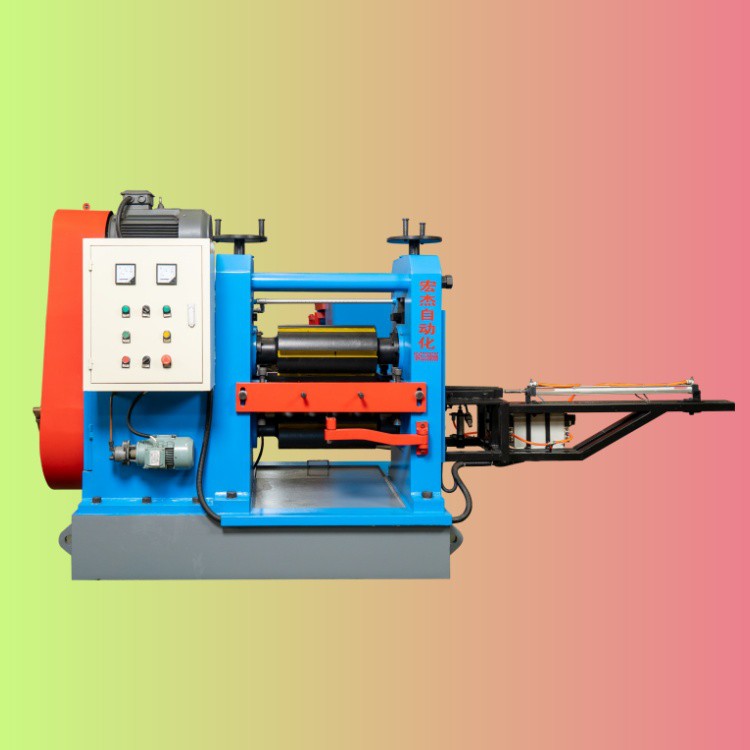
Cross wedge rolling (CWR) machines are highly efficient for producing automotive parts due to their ability to create complex geometries and strong, lightweight components. In the automotive industry, CWR is particularly useful for manufacturing parts that require high strength-to-weight ratios, such as connecting rods, crankshafts, drive shafts, and axles.

A high-efficiency cross wedge rolling (CWR) machine is an advanced piece of industrial equipment used in metal forging. It is designed to transform round or square billets into hexagonal, octagonal, or other polygonal shapes. The machine operates on the principle of applying a wedge that gradually reduces the billet's diameter from one end to the other, while simultaneously moving the billet forward through a set of dies.

A material saving CWR (cross wedge rolling) mill is engineered to minimize material waste during the metal forging process. This is achieved through precise control of the wedge angles, roll speeds, and the amount of reduction at each pass. The CWR mill can produce parts with very close tolerances, which means less machining is required after forging, further reducing material loss. Additionally, the CWR process allows for the use of smaller starting billets, as the progressive deformation effectively increases the length of the workpiece, which can be beneficial when dealing with expensive or scarce materials.

D46 Series Automatic Cross Wedge Rolling
D46 high-efficiency precision cross-wedge rolling is an advanced rolling technology that continuously and locally deforms the cylindrical billet through two rollers with wedge-shaped grooves so that the rolled workpiece is consistent with the shape of the groove at the bottom of the mold.
What is Cost Effective Cross Wedge Rolling Machine
A cost-effective cross wedge rolling (CWR) machine is an industrial forging device designed to produce metal parts with high strength and precision while minimizing material wastage and operational expenses. It achieves this by utilizing a wedge-shaped tool that progressively reduces the cross-sectional area of a billet as it is fed through the machine. The CWR process is well-suited for creating symmetrical parts with complex geometries, such as those found in automotive applications like axles, connecting rods, and drive shafts.
Features of Cost Effective Cross Wedge Rolling Machine
Good Product Quality
Because the metal fiber of the cross wedge rolling product remains continuous, the inner structure of the grain is refined and uniform, and the comprehensive mechanical properties can be improved by about 20%.
Save Raw Materials
Since the cross wedge rolling forming shaft parts are precision rolled, the machining allowance is small, and the machining allowance on one side is 1-1.5mm, and the non-matching surface can be realized without machining, so the utilization rate of materials is higher than that of traditional forging technology. In addition, cross wedge rolling can provide preforms for precision forging, and make full use of the waste heat of rolled products for isothermal normalizing heat treatment, saving a lot of electric energy.
Less Equipment Investment and Longer Mold Life
Cross-wedge rolling is local deformation, and the working load is small, so the equipment is light in weight, small in size and low in investment. Due to the small processing impact and the long service life of the mold, the service life of one time can reach more than 100,000 pieces, which is easy to realize automatic production and is suitable for mass production.
Working Conditions are Improved
The rolling process is a short-term continuous small deformation, no impact, low noise, which meets the environmental protection requirements of modern manufacturing.
Types of Cost Effective Cross Wedge Rolling Machine
Manual CWR machine
These are basic models that require manual operation for adjustments and controls. They are generally cheaper than automated machines but may have limitations in accuracy and productivity.
Semi-Automatic CWR machine
These machines provide a balance between cost and automation. They may require manual setup and loading of billets, but have automated mechanisms for wedge movement and rolling speeds that provide more consistent results and higher throughput than manual machines.
Fully Automatic CWR machine
Fully automated CWR machines are equipped with advanced control systems, including computer numerical control (CNC), to precisely control the rolling process. They can handle high-volume production with minimal human intervention, reducing labor costs and increasing consistency.
Versatile CWR Machine
These machines combine cross-wedge rolling with other forging processes such as upsetting or extrusion. They are versatile, but can be more expensive due to their complexity and multi-purpose nature.
Portable CWR Machine
Portable CWR machines are designed for flexibility and ease of transport and can be moved to different job sites. While they may have fewer features than stationary models, they can be a cost-effective solution for small-scale or mobile operations.
Universal CWR Machine
These machines are designed to accommodate a variety of billet sizes and shapes. Their versatility can be cost-effective for businesses that need to produce a variety of parts without investing in multiple specialized machines.
Custom CWR Machine
Some manufacturers choose custom CWR machines that are tailored to specific requirements, such as unique part geometries or special materials. Although the initial investment may be higher, if the machine significantly improves efficiency or part quality, the long-term benefits may outweigh the costs.
Parts of Cost Effective Cross Wedge Rolling Machine

Frame
The frame provides structural support to the entire machine, houses all other components and ensures rigidity during operation.
Wedge Tool
Consists of upper and lower wedges that exert the necessary force to reduce the cross-sectional area of the blank. Wedges are precision machined to match the required part geometry.
Guidance System
Guides align the blank as it moves through the machine, ensuring that the wedges contact the material evenly and accurately.
Rolling Mill
The rolling mill consists of rollers that support the billet and guide it through a wedge-shaped area. The rollers can be powered to move the blank at a controlled speed.
Drive System
The system powers the wedges and mill and usually consists of hydraulic or mechanical actuators. It is responsible for generating the force required for deformation.
Control System
Control systems can range from simple manual controls to complex CNC systems. It regulates the movement of wedges, rollers and blank feed, ensuring precision and repeatability.
Feeding Mechanism
The feed mechanism moves the billet into and out of the rolling zone. It can be as simple as a mechanical push or it can involve a more complex automated feeding system.
Heating Furnace
Although not part of the rolling mill itself, the heating furnace is crucial as it prepares the billet by heating it to the proper rolling temperature.
Cooling System
After rolling, the parts must be cooled to solidify the microstructure. This may involve air or water cooling systems integrated with the machine layout.
Lubrication System
Proper lubrication reduces friction between wedges, rolls and blanks, which is critical to maintaining finished part quality and extending machine component life.
Dust Collection and Exhaust System
These systems help maintain a clean working environment and may include filters and fans to remove particles generated during the rolling process.
Safety Interlocks and Devices
Safety features are essential to protect operators from potential hazards. These may include emergency stop buttons, safety guards and interlocks that prevent the machine from operating unless all safety conditions are met.
How to Choose Cost Effective Cross Wedge Rolling Machine
Determine Production Requirements
Evaluate the number of parts you need to produce, the size range of the blanks, and the complexity of the parts. This will help you determine the capacity requirements of your machine.
Budget Considerations
Develop a clear purchasing budget that includes any ancillary costs such as installation, training and maintenance. Remember, the initial cost is only one aspect; the total cost of ownership over time is just as important.
Machine Specifications
Evaluate machine specifications such as maximum rolling force, wedge angle and rolling speed. Make sure these specifications meet your production needs.
Material Handling
Consider how the machine handles the material before and after the rolling process. Efficient feeding and extraction systems save time and labor.
Automation Level
Decide what level of automation is right for your operation. Automated machines can increase productivity and consistency, but cost more upfront. For smaller operations, a semi-automatic or manual machine may be more cost-effective.
QC
Look for machines with features that ensure part quality, such as precision guides and control systems. Quality control directly affects product yield and marketability.
Maintenance and Support
Choose machines from manufacturers that offer reliable maintenance services and technical support. Easy access to spare parts and service minimizes downtime and repair costs.
Energy Efficiency
Consider the energy consumption of the machine. Over time, more energy-efficient machines can reduce operating costs.
How to Use Cost Effective Cross Wedge Rolling Machine
Prepare
First, inspect the machine to make sure it is clean, well lubricated, and in good working order. Check all safety devices to make sure they are working properly. The billet is heated to a temperature suitable for rolling. This is usually within the forging range of the material.
Loading Billets
Secure the heated blank to the loading mechanism or feeding system, making sure it is properly aligned. Start the feeding system and slowly advance the billet to the rolling area.
Default Setting
Set up the wedge tool according to the part's specifications. This includes adjusting the wedge angle and positioning the rollers. Configure the control system to the required parameters such as rolling speed, force and stroke length.
Rolling Process
Start a rolling cycle. The upper and lower wedges will close around the blank, exerting pressure and causing the material to flow and reduce the cross-section. As the wedge advances, the blank gradually deforms. Adjust rolling force and wedge angle based on real-time feedback to maintain consistent deformation.
Sort By
Multiple passes may be required to achieve the final shape and size. Each pass further refines the part and increases its length. Between passes, the part can be rotated or flipped to ensure uniform deformation.
Complete Part
Once the desired shape and size is achieved, the rolling process stops. The finished parts are then removed from the machine and moved to a cooling area.
Cool Down
Allow the part to cool at a controlled rate to prevent defects such as cracks or residual stress. Depending on material and part requirements, air cooling or water quenching may be used.
Inspection and Quality Control
Inspect finished parts for dimensional accuracy, surface finish and any defects. If necessary, non-destructive testing is performed to ensure parts meet required quality standards.
Machine Maintenance
Clean and inspect the machine after each use to remove any debris and check for wear. Perform routine maintenance tasks according to manufacturer's guidelines to ensure machine longevity and reliability.
How to Maintain Cost Effective Cross Wedge Rolling Machine
Regular Maintenance
Perform a routine maintenance schedule to ensure smooth machine operation. This includes lubricating moving parts, checking for wear and replacing worn parts promptly.
QC
Implement quality control measures to detect problems early and prevent defects in rolled products. This includes regularly inspecting finished products and adjusting machine settings as needed.
Efficient Workflow
Streamline production processes, minimize downtime and maximize output. Organize materials, tools, and workstations efficiently to reduce idle time and increase productivity.
Monitor Energy Usage
Track energy consumption and take steps to optimize efficiency. This includes using energy-efficient components, scheduling production during off-peak hours and minimizing idle time.
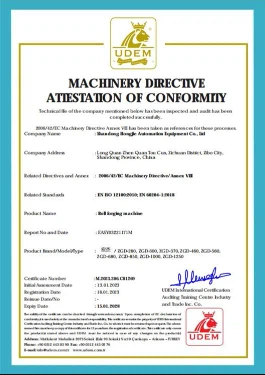
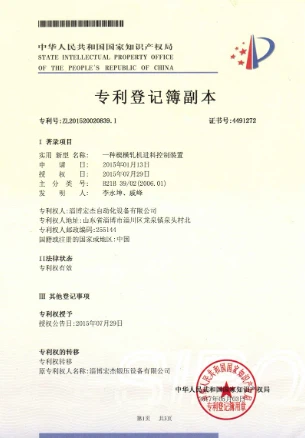
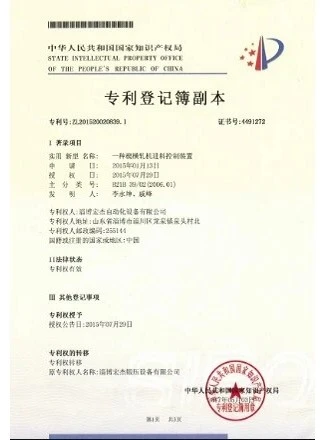
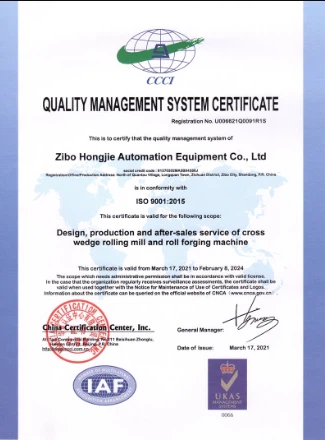
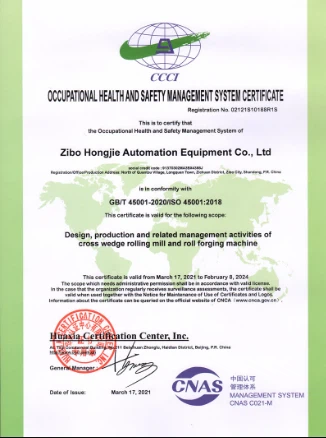
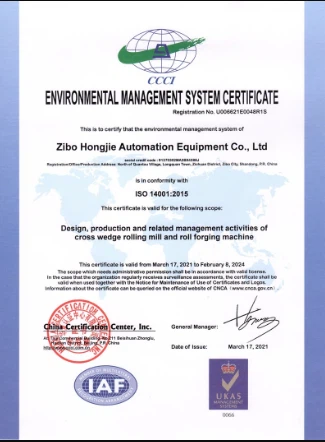
Certificate


Frequently Asked Questions
Hot Tags: What is a cross wedge rolling mill, China What is a cross wedge rolling mill manufacturers, suppliers, factory, For Pressing, Excavator Parts Roller Forge Machine, Roll Forging Machine, Roll Forging Machine Easy To Operate, Roll Forging with 30 Material Savings, Material Saving CWR Mill