


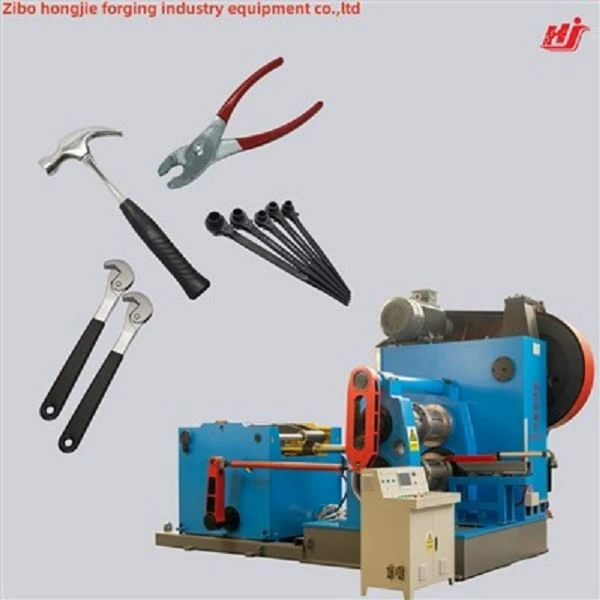
Zibo Hongjie Forging Industry Equipment : Your Trustworthy Full Automatic Roll Forging Machine Manufacturer!
Zibo Hongjie Forging Industry Equipment Co., Ltd.'s products cover all aspects of the forging field, from initial cutting and feeding, to heating, to metal preforming and final metal forming, as well as subsequent trimming and marking, all supported by corresponding equipment. Among them, roll forging machines and cross wedge rolling machines are the main products, which have a high reputation in the forging industry.
Rich Product Range
Our company takes roll forging machines and cross wedge rolling mills as its main products and has a high reputation in the forging industry. In addition to these two main products, it also provides comprehensive supporting equipment, including metal band saws, circular saws, induction heating furnaces, electric screw presses, hot forging presses, punches, etc.
Wide Range of Partners
Our company has established good cooperative relationships with many large enterprises such as Juli Group, Weichai Power, Dongfeng Motor Corporation, Teknorot, etc., and our products have provided forging equipment and solutions to many enterprises and customers in South Korea and other countries.
Advanced Production Equipment
Our production base has multiple independent processing centers. Such as floor boring and milling, five-side milling machining center, CNC machining center, drilling machine and large CNC processing equipment, etc. These are necessary CNC machinery and equipment for modern manufacturing.
Wide Range of Applications
Our products have been sold all over the world and are widely used in industries such as auto parts, hardware tools, power hardware, rigging and construction machinery.
Related Product Introduction

Autoparts Roll Forging Die Press
The biggest advantage of using a roll forging machine to forge billet for auto parts is high productivity. Compared with the traditional stamping or stretch forging method, the roll forging machine has higher production speed and efficiency. In addition, the auto parts roll forging die press can also realize continuous production without stopping to wait for cooling, which further improves production efficiency.

Roll Forging With 30% Material Savings
Roll forging is a metalworking process where a preheated billet is passed through a pair of shaped rolls under pressure to create a desired shape. In traditional machining processes, a large amount of material is removed as chips, leading to waste. Roll forging, however, deforms the material to its final shape with minimal removal, resulting in a higher material utilization ratio.

Rigging Parts Shackles Hooks Forging Machine
Rigging parts such as shackles and hooks often require forging to enhance their strength and durability. Forging is a manufacturing process that involves shaping metal while it is hot by applying compressive forces.

High Precision Automatic Forging Rolls
High precision automatic forging rolls are specialized pieces of equipment used in the forging industry to produce parts with tight tolerances and superior surface finishes. These rolls are designed to work in automatic forging machines, which can include rotary forging machines, upsetting machines, or hammer forges. They play a crucial role in the forging process by controlling the deformation of the billet into the desired shape and size.

Reduce Roller With Automatic Feeding Manipulator
In the context of engineering, a roller with an automatic feeding manipulator is a component of a system designed to automate the material handling and processing in various industrial applications. This system typically consists of a roller conveyor that moves materials along a set path, coupled with a manipulator or robot that automatically feeds or positions the material onto the roller conveyor.

Automatic Metalworking Rolling Mill
An automatic metalworking rolling mill is a sophisticated piece of machinery used in the metal processing industry to reduce the cross-sectional area of metal stock (billets, ingots, or slabs) by passing it through a pair of rollers. These rollers apply compressive forces to the workpiece, causing it to elongate and decrease in thickness. The process is known as rolling and is commonly used to produce sheets, bars, rods, tubes, and rails from various metals, including steel, aluminum, copper, and brass.

Preforming Reduce Roller Machine
A preforming reduce roller machine is a specialized type of rolling mill used in the metalworking industry for the initial shaping of a metal stock before it undergoes further rolling operations. This machine is designed to perform the first stage of the rolling process, known as preforming or rough rolling, which prepares the material for subsequent finishing stages.

ZGD Series Automatic Roll Forging Machine
The ZGD series automatic roll forging machine is a type of equipment used in metalworking to produce forgings with a cylindrical or slightly tapered shape. This machine combines the principles of both rolling and forging to achieve a uniform and precise shape in the metal workpieces.

Roll Forging Machine Easy To Operate
The automatic roll forging machine has an intuitive and simple operation interface, which enables the operator to quickly get started, reducing the training time and cost.
What is Full Automatic Roll Forging Machine
Full Automatic roll forging machine is mainly used for the pre-forging of closed die forgings or doing the final forgings. It can be composed of a forging production line with a CNC forging hammer, hydraulic hammer, electric screw press, etc forging machine. It can be an automation rolling forging production line match with an automatic robot or arm. it's widely used in automobiles, tractors, hand tools, etc forging industry.
Features of Full Automatic Roll Forging Machine
Integrated Control System
The Full Automatic Roll Forging Machine is equipped with an advanced PLC (Programmable Logic Controller) or CNC (Computer Numerical Control) system that can precisely control the forging process, including speed, pressure and temperature settings.
Variable Speed Drive
The ability to adjust the drum speed allows for optimal forging at different stages of the process, ensuring even metal processing and reducing the risk of defects.
Automatic Heating and Temperature Control
Full Automatic Roll Forging Machine includes an integrated furnace or heating element to preheat the metal billet. Automatic temperature control ensures materials reach the correct forging temperature for consistent results.
Multi-Pass Mold Set
The Full Automatic Roll Forging Machine features multiple sets of dies or rollers that gradually form the metal through successive passes, refining the part's geometry each time until the final shape is achieved.
Enhanced Quality Control
The integration of sensors and inspection systems enables real-time monitoring of the forging process, enabling quality control and ensuring parts meet strict specifications.
Types of Full Automatic Roll Forging Machine
Horizontal Roll Forging Machine
Horizontal Roll Forging Machine In this configuration, the rolls are placed horizontally. Suitable for mass production and capable of handling heavy workpieces. Horizontal machines are typically used to produce shafts, axles, and other long cylindrical parts.
Vertical Roller Forging Machine
The rollers of a conventional machine are arranged vertically, which facilitates space constraints and the handling of smaller, lighter workpieces. They are typically used to produce small and medium-sized forgings.
Swing Roller Forging Machine
The rollers of an oscillating roller forging machine can be oscillated away from the forging area, allowing easy access to the workpiece. Oscillating roller machines are versatile and can accommodate a variety of part sizes and shapes.
Planetary Roller Forging Machine
Planetary roller forging machines are named for their planetary motion, in which the rollers travel around a center point. These machines are particularly good at producing symmetrical parts with complex geometries.
Rotary Forging Machine
Rotary forging involves a combination of rolling and spinning actions. As the workpiece passes through the rollers, the machine rotates the workpiece, deforming the material into the desired shape. This method is ideal for creating parts with a high degree of rotational symmetry.
Multi-Roller Forging Machine
Multi-roller forging machines have more than two rollers, allowing for multiple deformation zones and the ability to create more complex shapes. Multi-roll forging is ideal for producing parts with detailed features and precise dimensions.
Parts of Full Automatic Roll Forging Machine
Frame
The structural backbone of the machine, housing all other components and providing stability during operation.
Roller
The main working part that applies pressure and deforms the metal blank into the desired shape. They can be flat, fluted or have a specific profile, depending on the part being forged.
Drive System
It consists of a motor and a gearbox to provide power to the roller, allowing the roller to rotate and move laterally as needed.
Control System
Typically an advanced PLC or CNC system that automates the forging process, including speed, pressure and temperature control.
Heating Furnace
Integrated into the machine or used alone, it is used to heat the metal blank to the appropriate forging temperature before it enters the rolls.
Feeding System
Automatic loading of metal blanks into the forging area, typically including a feed mechanism and conveyor system.
Trimming and Cutting Equipment
Removing excess material from forged parts after forming ensures accuracy and consistency.
Cooling System
May include water or air cooling mechanisms to cool the rollers and machine components to prevent overheating during continuous operation.
Safety Devices
Includes emergency stops, interlocks and barriers to protect operators from injury.
Operation Console
Where the operator enters commands and monitors the forging process. It may include touch screens and digital displays.
Lubrication System
Apply lubricant to rolls and workpieces to reduce friction and wear, improve surface quality, and promote material flow.
Dust Removal System
Collect dust or particles generated during the forging process to keep the environment clean and ensure operator safety.
Parts Ejection Mechanism
The finished parts are automatically removed from the rolls after forging.
How to Choose Full Automatic Roll Forging Machine
Forging Materials and Dimensions
Determine the type of metal to be forged and the size of the part. Different materials may require different roll types and temperatures. Also consider the maximum and minimum cross-sectional area of the workpiece to select a machine with the appropriate roll capacity.
Roll Configuration
Horizontal and vertical roll forging machines are selected based on the size and weight of the workpiece. Horizontal machines are generally better suited for larger, heavier parts, while vertical machines are more compact and suitable for smaller parts.
Yield
Assess your expected productivity. High-volume operations may benefit from machines with higher levels of automation and faster cycle times.
Roller Design and Contours
The design of the roll determines the shape of the part. Make sure the machine's roll profile matches the required geometry of the forged part. Custom roll designs may be required for complex shapes.
Machine Capacity
Consider the tonnage capacity of the machine, which should be sufficient to deform the metal blank into the desired shape without exceeding its limits.
Control System
Look for machines with user-friendly control systems that allow precise control of speed, pressure and temperature. Advanced control systems can optimize the forging process and improve product quality.
Heating and Cooling Systems
If the machine is not equipped with an integrated furnace, evaluate whether an external furnace is required. Also, make sure there is an adequate cooling system to prevent rolls and machine parts from overheating.
Automation Features
Automatic loading and unloading systems, part ejection mechanisms and trimming devices can significantly increase productivity and reduce labor costs.
How to Choose Full Automatic Roll Forging Machine
Determine the Correct Rolling Configuration
Depending on the size and complexity of the part, decide on a horizontal or vertical configuration. Horizontal machines are better suited for large, heavy parts, while vertical machines are suitable for smaller, lighter parts.
Consider Control Systems
Choose machines with sophisticated control systems that provide precise control of speed, pressure and temperature. This improves product quality and optimizes the forging process.
Find an Efficient Heating and Cooling System
An integrated furnace or external heating system is critical to bringing the metal blank to the proper forging temperature. Adequate cooling systems are required to prevent rolls and machine parts from overheating.
Selecting the Appropriate Roll Profile
The profile of the roll must match the required shape of the forged part. For unique geometries, custom roll designs may be required.
Assess Machine Capacity
Make sure the machine's tonnage capacity is sufficient to deform the metal stock without exceeding its limits.
Evaluate Automation Capabilities
Automatic loading and unloading systems, parts ejection mechanisms and trimming devices can significantly increase productivity and reduce labor costs.
Routine Maintenance
Clean the machine after each shift to remove any metal shavings, dust or other debris. Check the rollers for any signs of damage or wear. car, check lubrication points and refill with recommended lubricant as needed. Check the hydraulic system for leaks and make sure all hoses are OK and connections are secure.
Weekly Maintenance
Clean hard-to-reach areas more thoroughly. Check and clean the cooling system to ensure the coolant level is correct and the system is operating properly. As well as inspecting electrical components and wiring for any signs of corrosion or damage.
Monthly Maintenance
Replace worn consumable parts such as seals, O-rings and gaskets. Check and tighten loose bolts and fasteners. As well as calibrate control systems and check sensor accuracy. Perform a complete inspection of the machine's structural integrity.
Quarterly Maintenance
Perform a detailed inspection of the drum, including alignment and balance. Check the drive system for any unusual noise or vibration. Also check the alignment of the machine and make adjustments if necessary.
Annual Maintenance
Overhaul the machine, disassembling major components for thorough cleaning and inspection as necessary. Replace any severely worn parts that may affect performance. If applicable, upgrade software and firmware to the latest versions. Perform load testing to ensure the machine is operating within its specified parameters.
Preventive Maintenance Plan
Develop a preventive maintenance schedule based on machine usage and manufacturer recommendations. Train employees on proper maintenance procedures and safety practices. Keep a record of all maintenance activities, including dates, parts replaced, and any problems encountered.
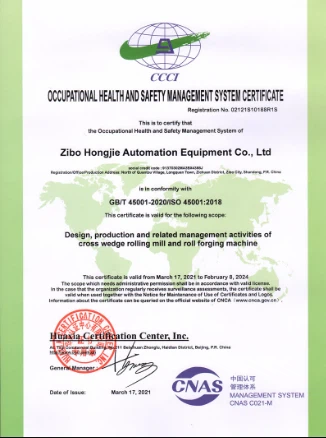
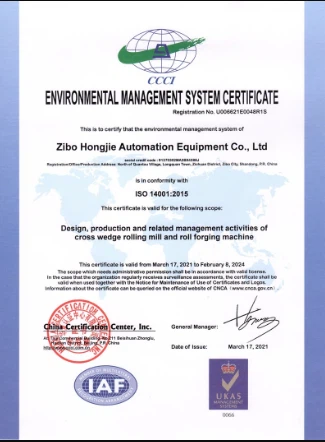
Certificate
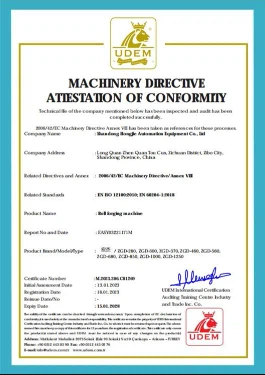


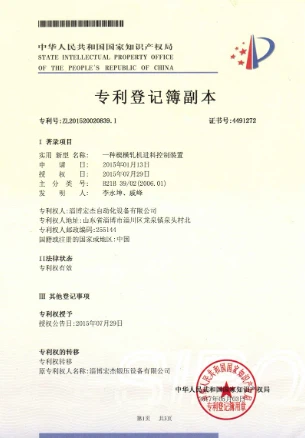

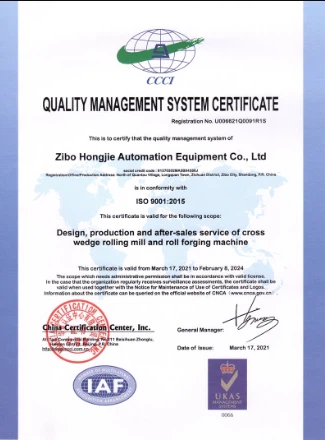
Frequently Asked Questions
Hot Tags: Roll Forge Reducer Forge Handtools Factory, China Roll Forge Reducer Forge Handtools Factory manufacturers, suppliers, factory, Customise Bucket Teeth Forging Line, Direct Drive Electric Screw Press, Hot Die Forging Press Machine, High Efficiency CWR Machine, Roll Forging with 30 Material Savings, For Heating